Are you feeling held back by the limitations of traditional blogging platforms like WordPress?
Do you crave more control over your content and how it’s presented? In that case, it’s time to explore the world of headless CMS, and Strapi is leading the charge.
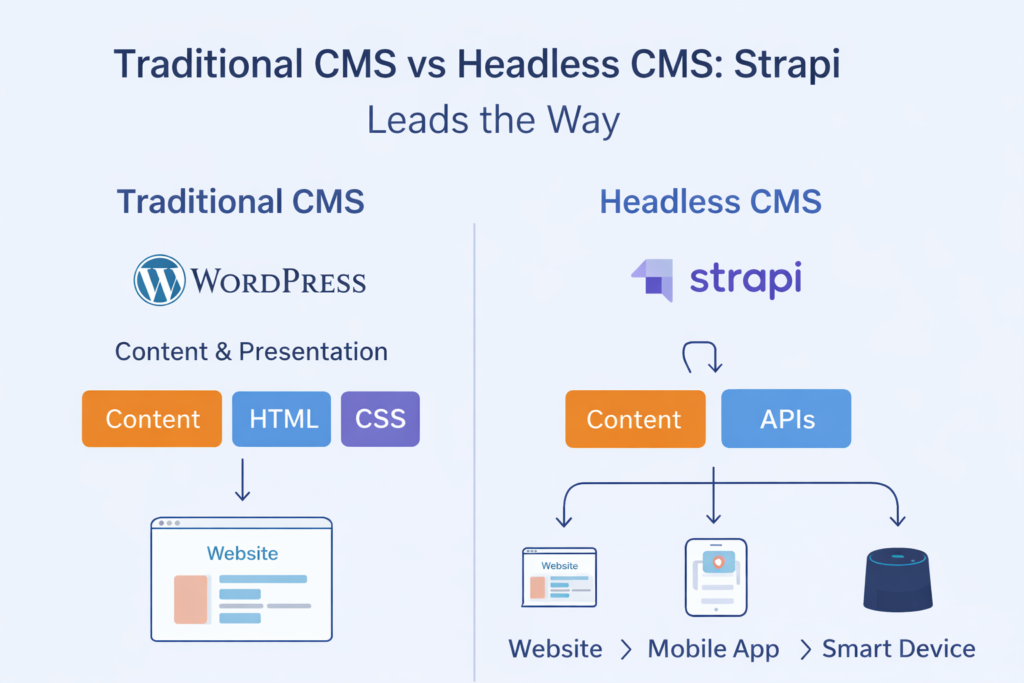
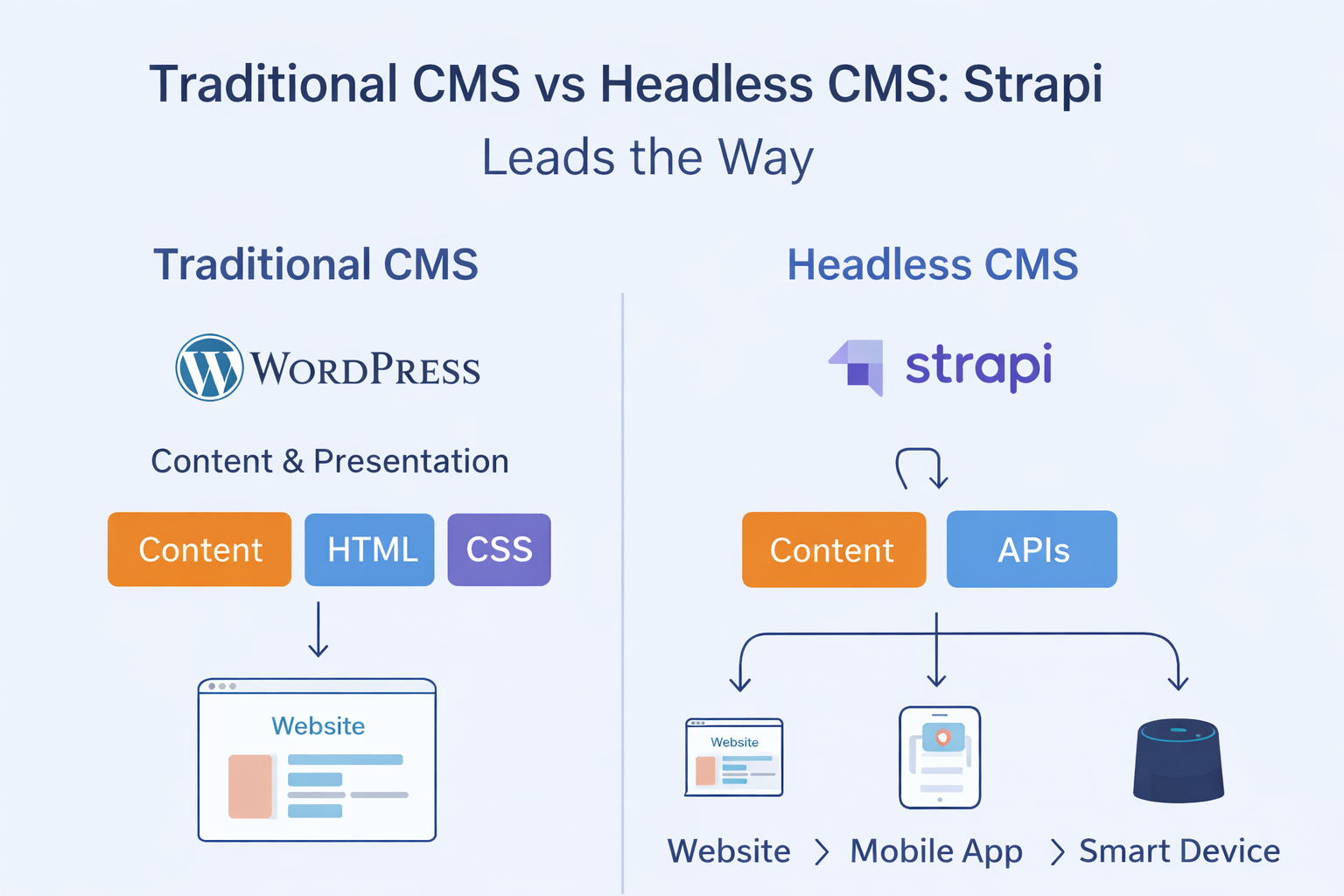
Traditional CMS platforms tightly couple your content (the “body”) with its presentation (the “head”). As a result, you’re often stuck with pre-designed themes and limited customization options. Imagine a restaurant where the kitchen staff also dictates the dining room decor – not very flexible, right?
However, headless CMS breaks this connection. You store your content in a central repository and access it via APIs (like a well-organized kitchen). The “head” – your website, app, or any other platform – can pull this content and display it however you want (the dining room design of your choice).
Why Choose Headless CMS?
- First, Unleashed Creativity: Design truly unique and engaging user experiences without CMS restrictions.
Use any frontend technology you prefer (React, Vue, Angular, or even static site generators). - Additionally, Omnichannel Reach: Deliver your blog content seamlessly across multiple channels – your website, mobile app, social media, even smart devices – all from a single source.
- Moreover, Blazing Fast Performance: Decoupled architecture often leads to faster loading times, which is crucial for both user experience and SEO. Google loves speedy websites!
- As your blog grows, Scalability for Growth: As your blog grows, a headless CMS can handle the increased traffic and content volume more efficiently than traditional platforms.
- Finally, Future-Proof Your Content: Embrace the latest technologies and adapt to evolving digital trends without being tied to an outdated system.
Enter Strapi: The Headless Hero
Although several headless CMS options exist,Strapi stands out for its ease of use, flexibility, and open-source nature. It empowers bloggers and developers like.
- Intuitive Interface: Strapi’s admin panel is user-friendly, making content creation and management a breeze. You don’t need to be a coding guru to get started.
- Customizable Content Types: Define your own content structures and fields, allowing you to tailor Strapi to your specific blogging needs.
- Powerful API: Strapi generates a robust API so you can access your content from any platform
- Extensible and Open Source: Benefit from a vibrant community and a constantly evolving platform. Strapi’s open-source nature means it’s highly customizable and adaptable.
Strapi vs. WordPress: A Paradigm Shift
On the other hand, WordPress is great for getting started quickly, but it can become limiting as your blog’s needs become more complex. Strapi, while requiring a bit more technical setup upfront, offers long-term flexibility and scalability. It’s like choosing between a pre-built house (WordPress) and designing your own dream home (Strapi).
Making the Switch to Headless
Of course, migrating your blog to a headless CMS might seem daunting, but the long-term benefits are well worth it. Strapi provides excellent documentation and resources to help you through the process.
Ready to embrace the future of blogging?
So, explore Strapi headless CMS today and unlock the full potential of your content. Break free from the limitations of traditional platforms and create a truly unique and engaging online presence. Whether you’re a seasoned developer or a passionate blogger, Strapi has something to offer. Take control of your content and experience the power of headless.
[…] Also Read-Strapi Headless CMS […]
Helpfull Information
From start to finish, your content is simply amazing. You have a talent for making complex topics easy to understand and I always come away with valuable insights.
Thank you so much for your kind words! I’m really glad you found the content helpful and easy to understand. 😊 I’ll definitely keep sharing more practical guides and valuable insights. Stay tuned for more!